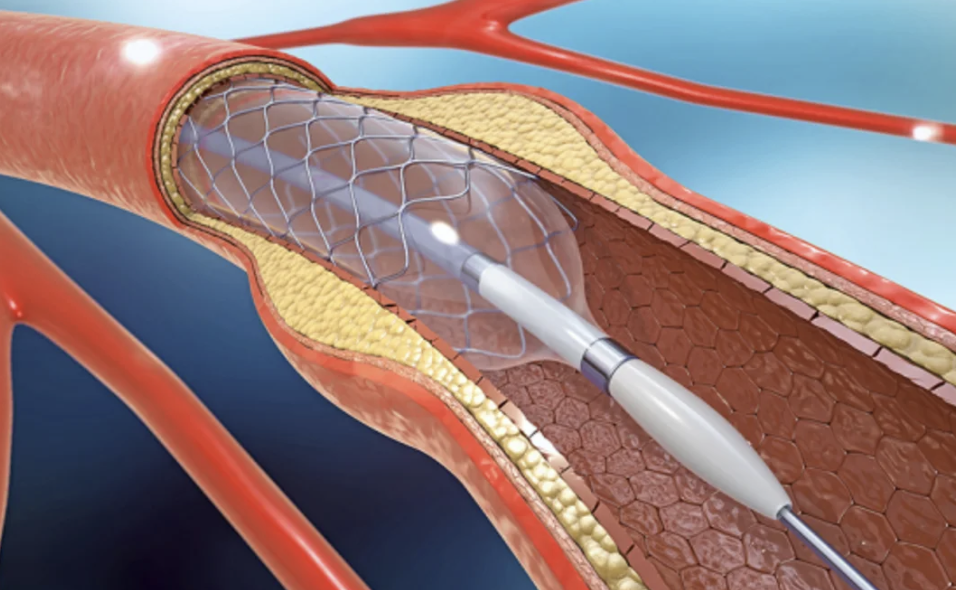
The new device lets interventional radiologists set the shunt anywhere from 6 to 10 mm. BD cites interim trial data but has not yet released the outcome figures.
Background
BD (Becton, Dickinson and Company) announced on Oct. 28, 2026, that it has started selling its Liverty TIPS Stent Graft in the United States [1]. The device is used in transjugular intrahepatic portosystemic shunt (TIPS) procedures, one of interventional radiology's signature image-guided operations.
In a TIPS, an interventional radiologist works through a vein in the neck to build a new channel inside the liver. The channel connects the portal vein to a hepatic vein, which lowers the high pressure (portal hypertension) that cirrhosis can cause. BD says the procedure is used to manage complications such as variceal bleeding and refractory ascites [1]. In earlier materials, BD cited a Global Burden of Disease estimate that about 58 million people worldwide live with cirrhosis [2].
The size of the shunt matters a great deal. If the channel is too narrow, pressure may stay high; if it is too wide, more blood bypasses the liver. The Liverty device was built around that trade-off.
What BD Announced
According to BD, the stent graft's diameter can be expanded from 6 to 10 mm to fit each patient's hemodynamics. It comes in covered lengths of 4 to 10 cm, which the company calls the longest commercially available [1]. Other features BD lists [1]:
a fully sheathed, tri-axial delivery system;
radiopaque markers and a marker band to guide placement under fluoroscopy;
a delivery system that can track through the liver tissue without a sheath.
BD's April materials describe a self-expanding nitinol frame. It is covered in two layers of ePTFE, with carbon added to the inner surface [2].
The device reached Europe first. BD announced the CE mark in April 2026, and at that time it called Liverty an investigational device in the United States [2][4]. In the U.S. launch announcement, BD says the product arrives with "established clinical and physician experience in Europe" [1].
Ziv Haskal, MD, is the principal investigator of the company's ARCH trial and a professor of radiology and surgery at the University of Virginia. In BD's announcement, he said the device's "unique ease of delivering the device into position" sets it apart. He added that the wider range of diameters and lengths should help physicians tailor treatment [1]. The release does not say whether Dr. Haskal has a financial relationship with BD.
The Evidence So Far: Study Design and Limitations
BD says the launch is supported by six-month interim results from ARCH. ARCH is a prospective, multicenter study of 177 patients run under an FDA investigational device exemption (IDE) [1]. BD describes it as a global, single-arm study of the device's safety and effectiveness in treating complications of portal hypertension [2]. The company calls it "the first and only IDE study with small TIPS diameter (6-7 mm) clinical data" [1]. Initial ARCH data were scheduled for a podium presentation at the Society of Interventional Radiology's annual meeting on April 12, 2026 [2].
Readers should note what the announcement leaves out. BD's U.S. launch release reports no outcome figures. It gives no rates of rebleeding, ascites control, shunt dysfunction, hepatic encephalopathy or death [1]. Trade coverage of the launch likewise reports only the 177-patient enrollment and the inclusion of small-diameter data [3]. The release also does not state the FDA pathway or the date of FDA authorization. VBN could not find those details in FDA's public device databases as of publication.
Three further cautions apply. The results are interim. The study has a single arm, with no randomized comparison against existing TIPS stent grafts. And the information released so far comes from the manufacturer. A press release is a fine place to learn a stent's length, but a less reliable place to judge whether it works.
What Comes Next
Full peer-reviewed ARCH results will matter most. Clinicians will want to know whether small, calibrated shunts reduce hepatic encephalopathy without giving up control of bleeding and ascites. Until those figures are published, Liverty's advantages over current devices rest on its design and on company-reported experience. VBN will report the full ARCH results when they appear.
This article is for informational purposes only and is not medical advice. Readers should consult their clinician about their own care.
References
BD (Becton, Dickinson and Company). BD Advances Portal Hypertension Care in the U.S. with Support for More Personalized Treatment Options. News release (PR Newswire). Oct 28, 2026. https://news.bd.com/2026-10-28-BD-Advances-Portal-Hypertension-Care-in-the-U-S-with-Support-for-More-Personalized-Treatment-Options
BD (Becton, Dickinson and Company). BD Delivers Next-Generation TIPS Innovation to Advance Portal Hypertension Care Across the European Union. News release (PR Newswire). Apr 8, 2026. https://news.bd.com/2026-04-08-BD-Delivers-Next-Generation-TIPS-Innovation-to-Advance-Portal-Hypertension-Care-Across-the-European-Union
Endovascular Today. BD's Liverty TIPS Stent Graft for Portal Hypertension Launched in the United States. Oct 28, 2026. https://evtoday.com/news/bds-liverty-tips-stent-graft-for-portal-hypertension-launched-in-the-united-states
Whooley S. BD picks up CE mark for next-gen stent graft. MassDevice. Apr 8, 2026. https://www.massdevice.com/bd-ce-mark-next-gen-stent-graft/