Humacyte has opened a 10-patient study of an off-the-shelf bioengineered vessel for heart bypass surgery. So far the evidence comes from animal studies, and human results are still to come.
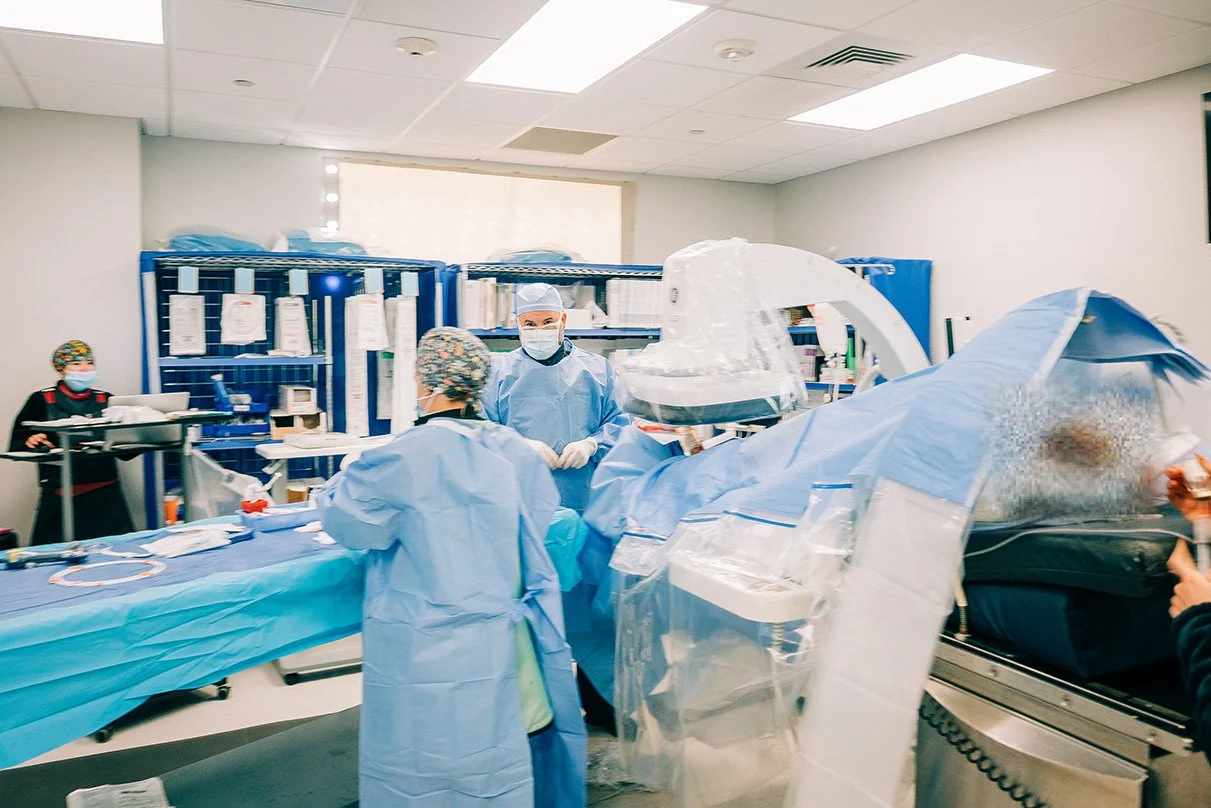
Operating Room at Innovative Vascular Institute, in San Antonio TX.
On November 9, 2026, Humacyte announced that it has started a first-in-human Phase 2a study of its coronary tissue engineered vessel (CTEV) in patients undergoing coronary artery bypass grafting (CABG) [1]. The company describes the CTEV as an investigational, small-diameter bioengineered vessel meant to be an off-the-shelf bypass conduit [1]. The study design was presented at the American Heart Association's Scientific Sessions 2026 in Chicago [1].
Background
In bypass surgery, surgeons usually reroute blood around blocked coronary arteries using the patient's own vessels, often the saphenous vein from the leg. According to Humacyte, more than 400,000 coronary arterial grafts are placed each year in the United States. The company also says one-year patency for saphenous vein grafts "is often as low as 75%" [1]. Harvesting the vein can cause wound complications such as infection, and some patients do not have a usable vein [1]. In short, surgeons have long had to borrow plumbing from the patient's own leg, and Humacyte wants to offer something from the shelf instead.
The CTEV is made with the same manufacturing system as Humacyte's acellular tissue engineered vessel (ATEV) [1]. The FDA approved the ATEV in December 2024 for urgent arterial repair after extremity vascular trauma, and the company markets it as Symvess [1]. For any use outside that indication, the ATEV remains investigational [1].

What Was Announced
The Phase 2a study will evaluate the safety and efficacy of the CTEV as a bypass conduit in 10 adults with coronary artery disease [1]. Patency, meaning whether the graft stays open, will be assessed two months after implantation. Patients will be followed for up to three years [1]. The FDA accepted the company's investigational new drug (IND) application in July 2026, and the study is now open for enrollment [1].
On November 7, John H. Alexander, MD, MHS, of the Duke Clinical Research Institute, and Alan Kypson, MD, of UNC Rex Hospital presented the study design [1]. On November 8, Robert Kirkton, PhD, presented preclinical work in pig and sheep models [1]. According to the company, CTEV bypasses about 12 cm long were implanted in sheep for up to three months. They stayed open, and the host's own smooth muscle and endothelial cells moved into the vessel wall [1]. Humacyte also points to an earlier baboon study, published in JACC: Basic to Translational Science, in which the CTEV stayed open for up to six months [1]. Founder and CEO Laura Niklason, MD, PhD, said, "Our goal with the CTEV is to give cardiac surgeons an off-the-shelf conduit" [1].
Study Design and Limitations
Every figure in this article comes from the company's own press release [1]. No human results have been reported, and the trial is small and early-stage. The release does not name the clinical sites, and it does not give the graft's diameter [1]. A two-month patency check is an early look at a graft that would need to work for years. The sheep data were presented at a scientific meeting, and the release does not say whether they have been peer-reviewed. The release also includes standard cautions that its forward-looking statements may not prove accurate [1].
What Comes Next
Humacyte says the study is enrolling now, with three years of follow-up planned [1]. The first meaningful readout will be whether the grafts are still open at two months. That means an early answer could come well before the long-term question is settled.
This article is for informational purposes only and is not medical advice. Readers should consult their clinician about their own care.
References
Humacyte, Inc. "Humacyte Highlights First-in-Human Coronary Bypass Study at American Heart Association Scientific Sessions 2026." GlobeNewswire. November 9, 2026. https://www.globenewswire.com/news-release/2026/11/09/3398371/0/en/humacyte-highlights-first-in-human-coronary-bypass-study-at-american-heart-association-scientific-sessions-2026.html