
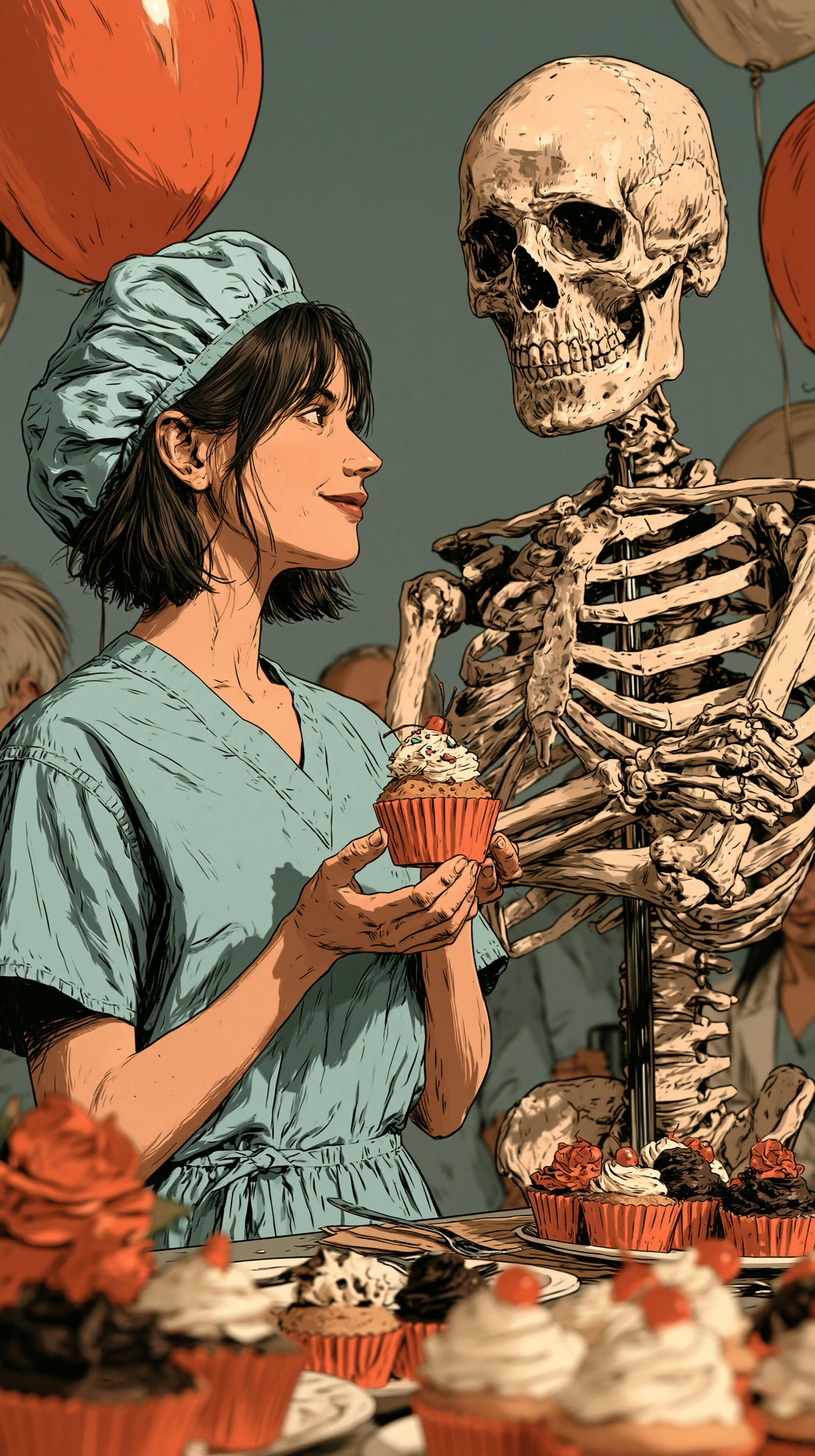
Hospital Halloween party tip: don’t go as a skeleton. The anatomy lab’s skeleton has worn that costume for forty years, and he takes it very personally.
Hospital Halloween party tip: don’t go as a skeleton. The anatomy lab’s skeleton has worn that costume for forty years, and he takes it very personally.
 Phillip Leblanc
What I cover
Covering medical fraud means I get to spend months following a money trail that was supposed to go to patients but somehow ended up in an ostentatious summer home on Lake Norman. I’ve seen everything from kickbacks dressed up as “consulting fees” to charities that are generous mostly to their own founders. If a dollar goes missing between the patient and the provider, I find it.
I focus on interventional radiology and the quiet evolution of robotic systems that are breaking medical ceilings, healing patients with catheters instead of scalpels. I believe in the good guys, so I write about altruistic causes: the nurses, doctors and nonprofits doing honest work with no PR team.
I write wellness and medical culture pieces for The Culture Desk RX: strangers sweating it out in a street sauna, doctors with unusual side hustles, and the general human comedy of trying to stay healthy. A good fraud story and a good sauna story have more in common than you’d think. Somebody’s always sweating.
My Background
Growing up in East Durham, North Carolina, you learn two things: how to throw a jab and when to keep your mouth closed. My editor says it explains my interviewing style. The only trophies I keep on the shelf are the ones that count: the times someone had to give the money back. Dad had strong opinions about deadlines and the pharmaceutical industry, so here I am.
Journalistic Ethics
Vital Biomedical News is reader-funded and beholden to no one. We take no money from pharmaceutical or medical device companies, and neither do I. I don’t accept gifts, junkets or favors, and I don’t bankroll political causes. My only allegiance is to the paper trail.
I deal in documents, not anecdotes. Every claim is corroborated against primary sources: court filings, federal records, clinical data and the people who were actually in the room. Sources get candor, confidential sources get anonymity, and powerful institutions get scrutiny, whether they welcome it or not.
I’m unfailingly courteous to everyone I interview, including the people I’m investigating. Civility is not clemency.